

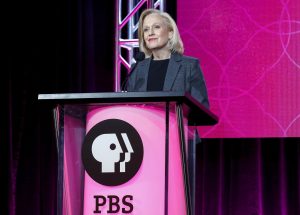
President and CEO, PBS
For generations, PBS has been a trusted source of educational programming, inspiring children through Sesame Street, exploring the wonders of science with NOVA, and bringing world-class arts programming into American homes through Great Performances. According to PBS President and CEO Paula Kerger, however, many of these cherished programs—and the future of public broadcasting itself—are now at risk.
Speaking at the Chautauqua Institution, Kerger discussed the challenges facing PBS following recent federal funding reductions. She reminded the audience that public broadcasting flourished after President Lyndon B. Johnson signed the Public Broadcasting Act into law in 1967, establishing a national commitment to educational and cultural programming. Today, she warned, that commitment is being tested.
“PBS will only exist if we care and support it,” Kerger told the audience. She emphasized that PBS serves an important public purpose beyond entertainment and education. The PBS network also functions as the nation’s designated backup emergency broadcast system, providing critical communications during times of crisis.
Kerger reflected on the enduring legacy of Fred Rogers, the beloved host of Mister Rogers’ Neighborhood. A native of Pittsburgh, Rogers believed in treating every child with dignity and respect, values that continue to shape PBS programming today.
In addition to reductions in federal support for public broadcasting, Kerger noted that cuts to funding from the U.S. Department of Education have forced the elimination of several educational initiatives. These programs were designed to help children succeed in school while encouraging parents to watch PBS programming alongside their children and become more actively involved in their education.
Despite the financial challenges, Kerger said PBS remains committed to creating programming that serves all Americans. She expressed optimism about the network’s upcoming coverage of this fall’s midterm elections, while acknowledging that the funding cuts have hit rural PBS stations especially hard. Some stations, she said, have lost as much as half of their financial support, raising concerns about their ability to continue serving their local communities.
As PBS navigates an uncertain future, Kerger’s message was clear: The network’s survival depends not only on government funding but also on the continued support of viewers who value its unique mission of education, culture, and public service.
You must be logged in to post a comment.